
BA in Interior Architecture & Design
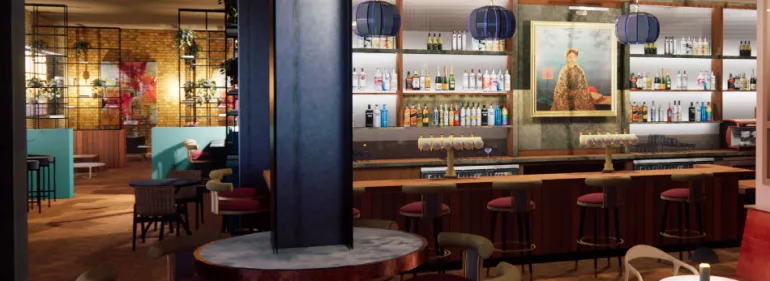
Course Overview
Demonstrate your creativity, technical ability and problem-solving expertise with this exciting learning opportunity
The BA in Interior Architecture & Design is a three-year level 7 degree course that can be taken as either a full-time or an evening access programme. This course guides students from initiation through to successful completion, producing an Interior Design graduate who can create, design, problem-solve, and act professionally in all related working environments. Successful Interior Design graduates are industry-ready and creatively and technically proficient to propose innovative solutions and problem-solving expertise within the built environment.
* All candidates for the evening access programme should be 23 years or older.
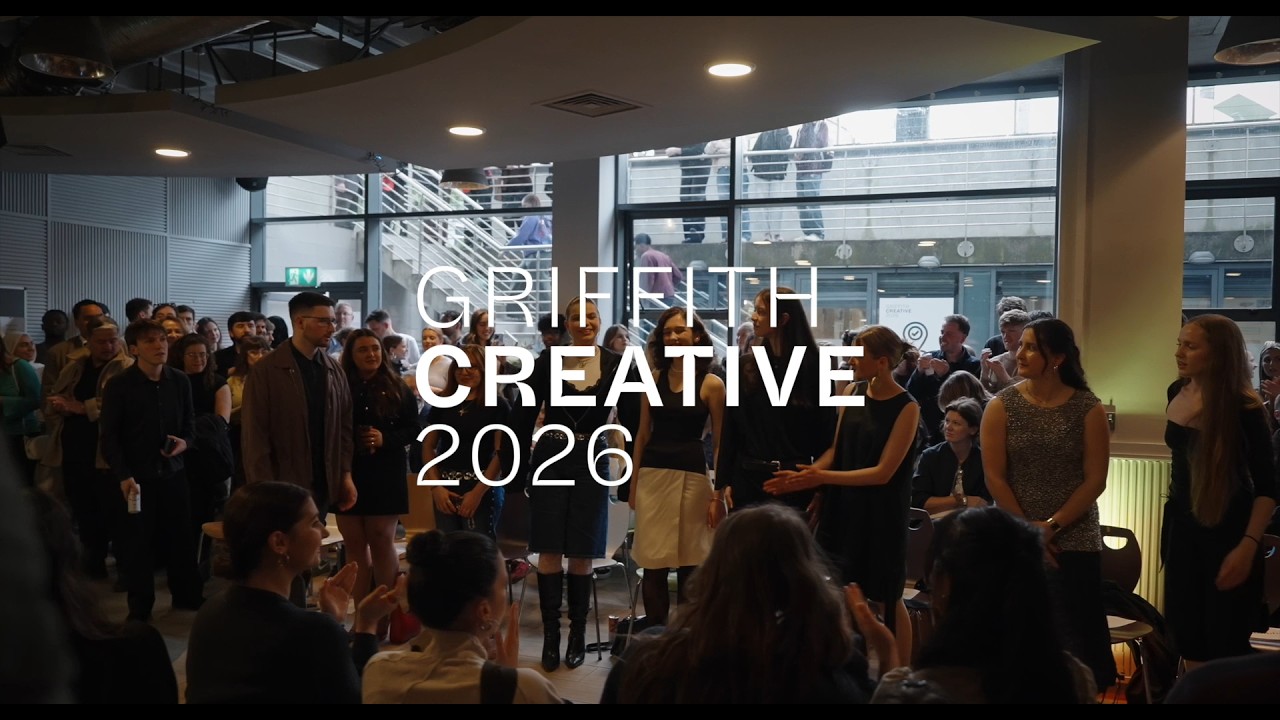
Check out Griffith Creative 2026 for inspiration on what you can create.


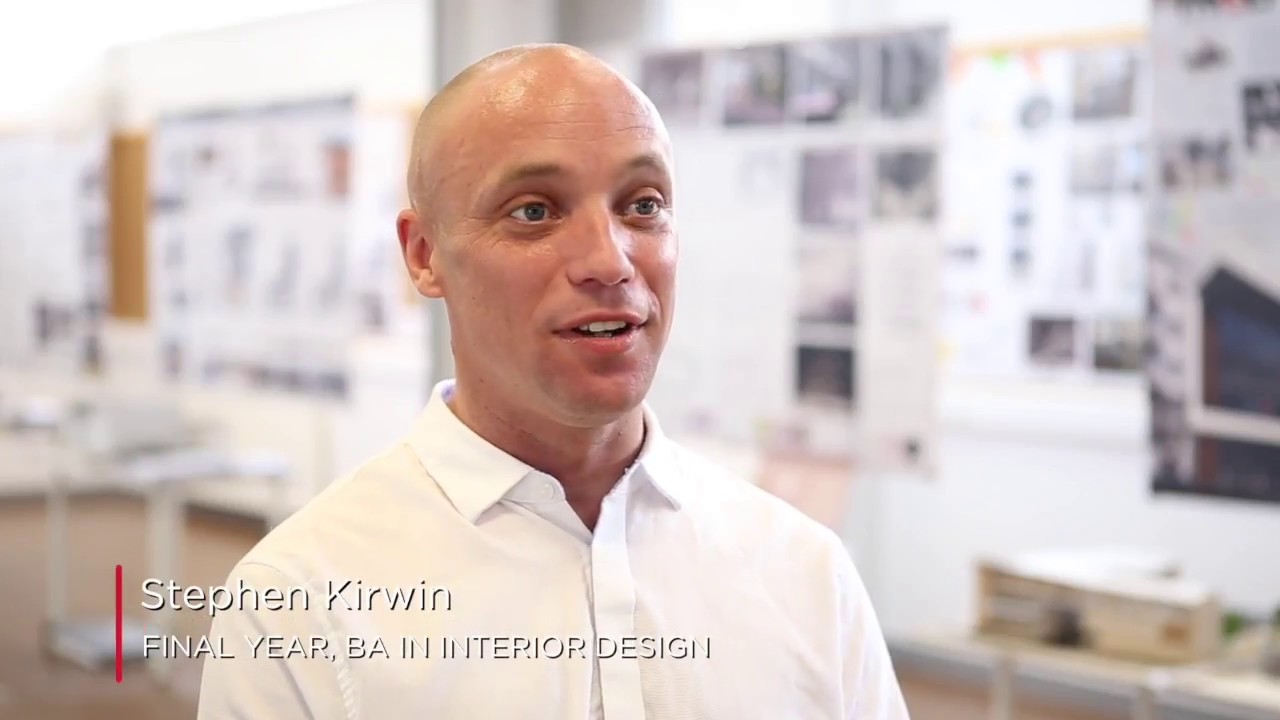


Why Study Interior Design at Griffith College?
- Recognised by the European Council of Interior Architects (ECIA), the Institute of Designers in Ireland (IDI), and The Interiors Association (IA).
- Use industry-standard software like Adobe Suite, AutoCAD, Revit, SketchUp, Twinmotion and Enscape, alongside traditional model making and freehand drawing. (Please note – AutoDesk software is not compatible with Mac).
- 100% continuous assessment—no written exams.
- Design an interior design project from concept to construction stage.
- Gain advanced skills in space planning, design detailing, and material specification.
- Develop professional problem-solving skills through interpreting design project briefs independently and in teams.
- Practical, industry-focused training that prepares you for real-world design challenges.
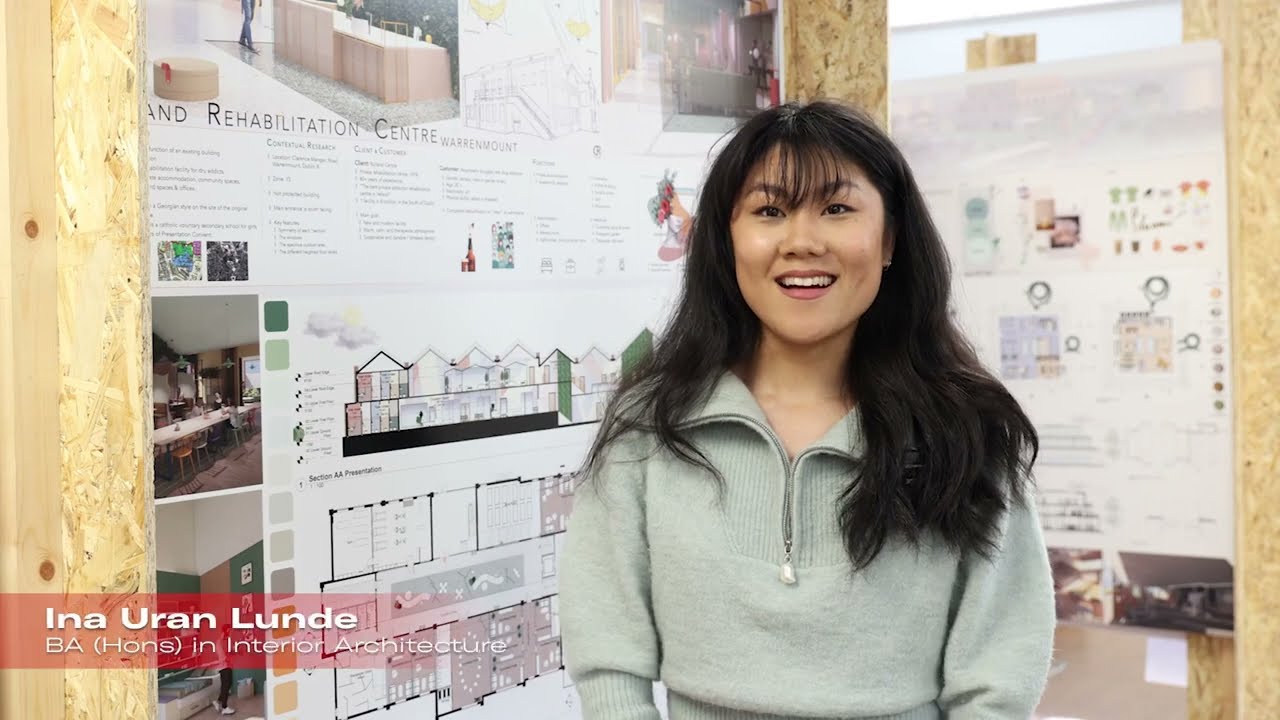
- Award-winning student work regularly showcased in industry exhibitions.
Course Highlights
- Small Class Sizes, Big Support
Get personalised feedback and mentorship in a close-knit, collaborative environment. - Hands-On Studio Experience
Develop practical skills in fully-equipped design studios. - Learn from Industry Professionals
Be taught by designers, makers, and creatives with real-world experience. - Showcase Your Work at Griffith Creative Week
Present your final-year projects to industry, peers, and the public. - Field Trips & Real-World Inspiration
Explore exhibitions, studios, and design briefs to fuel your creativity.
Questions? Have a look at our FAQ section.
Internships and Careers
Each year, Griffith College students and graduates secure internships with leading design companies in Ireland.

Design Studio Learning
Design Studio is the core practical component of our Design programmes. Delivered on campus in a collaborative studio environment, it provides you with the opportunity to build practical skills, develop creative ideas, and gain experience working in a way that reflects professional design practice.
What Happens in Studio?
You will learn through project-based work, engaging with design briefs, presentations, critiques, and collaborative activities. Regular feedback from lecturers and peers encourages the development of creative thinking, problem-solving, communication, and professional presentation skills.
Throughout your studies, you will:
- Collaborate with fellow students on projects and activities
- Present and discuss ideas in a studio environment
- Receive constructive feedback from lecturers and peers
- Develop creative responses to design briefs
- Build a professional portfolio of work
Attendance and Engagement
Design Studio is an in-person learning experience that relies on active participation and engagement. The collaborative nature of studio learning means that you will benefit from being present, contributing to discussions, and working alongside your peers.
As a result, regular attendance is a mandatory part of the programme and is essential for students to gain the full benefit of the studio experience.
Is Design Studio Right for You?
Design Studio is ideal for students who enjoy creative problem-solving, collaborating with others, and learning through practical experience. It offers an engaging and supportive environment that prepares you for a professional career in the creative industries.
Questions? Have a look at our FAQ section.
Intake Dates
- Dublin - Full-Time - September 2026
- Dublin - Part-Time - September 2026
Are you applying through the CAO?
Check out our CAO HUB for everything you need to know about applying through the CAO!
Course Codes
- Dublin: GC490
What our students say

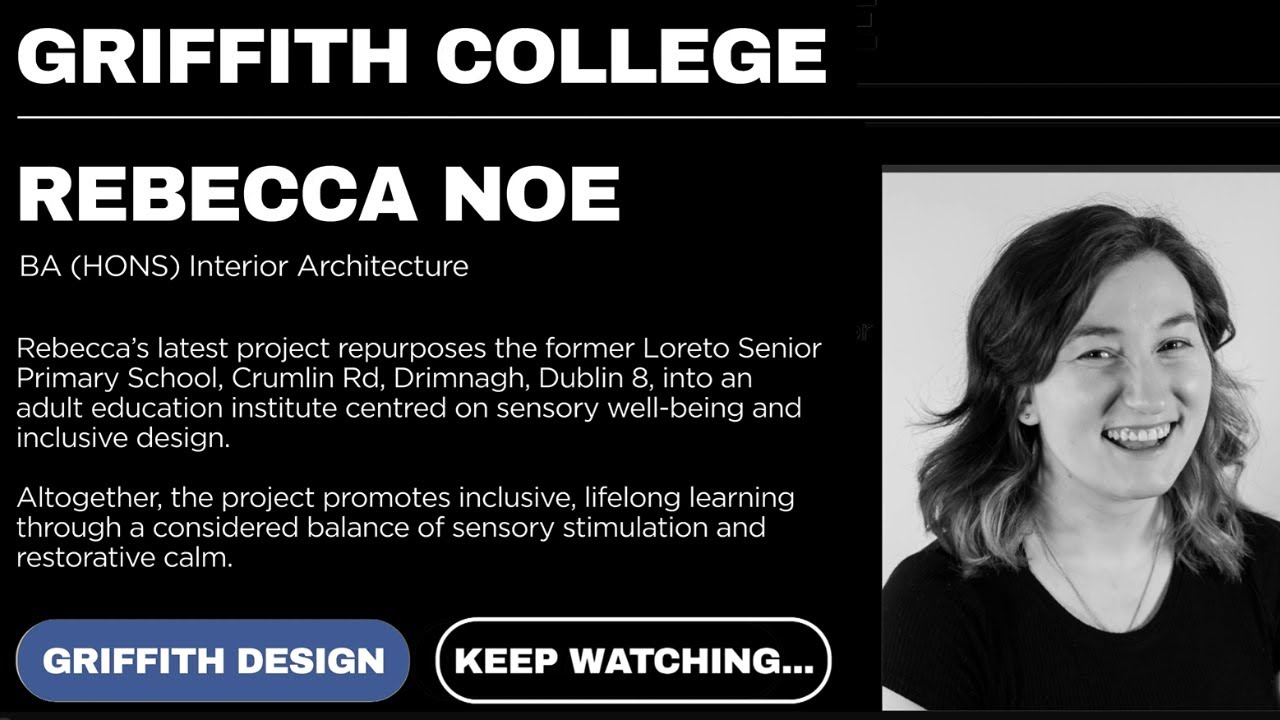
This is my first experience studying abroad, and I really love this country and college. I love the people and how I feel connected to the culture here, as well as seeing everything that's happening.
Interior Architecture

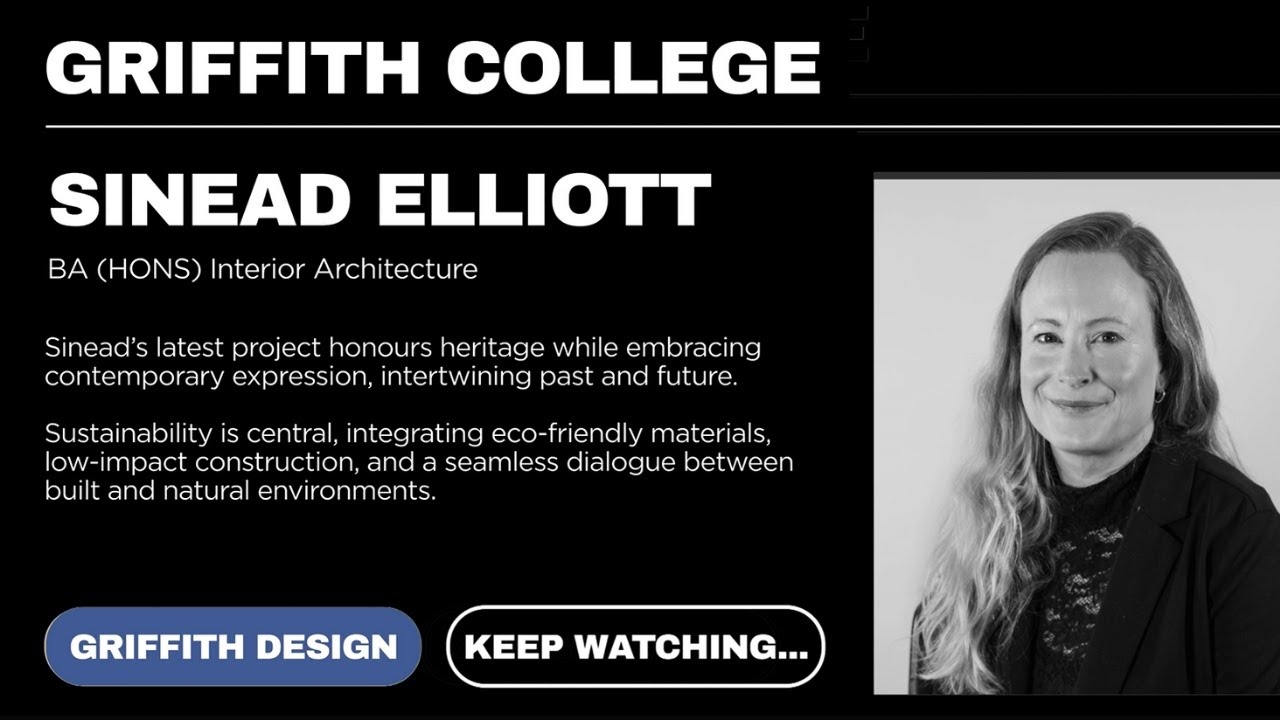
I love the size of my class. We have a really small, close-knit group, and I've really enjoyed getting to know everyone. We've become like a little family after working together for three years now.
Interior Architecture
Course Details
Year One
Creative Studio Projects 1
- Exploring Art & Design Concepts Through Studio Projects
- Introduction to Design Practice and Process
- Creative Problem-Solving through Design Projects
This module teaches the learner to assemble relevant information and research to assist in ideas generation to develop and create original images and to observe, record and respond, exploring a wide range of art and design practices. It also teaches the learners to apply visual methods, communicate ideas via free-hand drawing, technical drawing and graphic arts and identify primary and secondary visual research methodologies. Projects cover fine art, print, fashion, interior and graphic design.
2D Drawing and Image Making Techniques
- Foundations of 2D Drawing and Sketching
- Creative Techniques for 2D Visual Storytelling
- Hand-Drawn Visual Communication in Design
- Introduction to Image Making and Photography
- Sketching and Rendering Techniques for Design
This module teaches the learner to observe, record and analyse the physical environment, visually explaining concepts, ideas and three-dimensional space through sketching and applying sketching as a tool in the design process. It also teaches the learner still life, life drawing, fashion drawing, interior drawing, illustration and animation drawing skills. It introduces the learner to photography.
- Introduction to Digital Design Software
- Fundamentals of Digital Design Tools
- Digital Design Applications and Techniques
This module introduces learners to Bit map Graphics software and Vector Graphics software to a required degree of proficiency.
|
Design Principles
This module teaches the learner to recognise, understand and communicate a specific design terminology in relation to design principles and their application, using conceptual themes in the creation and use of shapes and volumes. |
Creative Studio Projects 2
- Advanced Design Projects and Applications
- Building on Design Concepts and Techniques
- Innovative Solutions through Creative Studio Projects
- Portfolio Development and Professional Practice
This module teaches the learner to understand the importance of contextual references, to solve problems by applying knowledge and experience, to be able to initiate research and independently select media, and to present a final major project and portfolio of work. Projects cover photography and a final project in either fashion, interior or graphic design.
3D Drawing Techniques
- Exploring Spatial Concepts through Hand-Drawing
- Mastering 3D Sketching and Rendering Techniques
- Advanced Drawing for 3D Design
This module teaches the learner to draw/trace and colour optical illusions, to draw simple sketches using grid paper, to render sketches with pencils and/or felt markers as a means of enhancing sketches, to use one, two and three-point perspective to sketch room interiors adding colour, draw/trace orthographic views of simple models on grid paper, complete orthographic views from 3D sketches and trace/redraw isometric views on grid paper by interpreting 2D drawings.
Digital Design Tools 2
- Advanced Digital Design Software Techniques
- Specialised Applications of Digital Design Tools
- Digital Design Strategies and Workflows
This module introduces learners to Professional graphic design publishing software and Video editing software to a required degree of proficiency. It introduces the learner to use image manipulation and to enhance their design skills using vector-based graphics applications and composite layered image making. The module also integrates the graphic image with page layout and designing visual documents for web and print.
Visual Culture & Theory
- Exploring Visual Culture and Its Impact on Design
- Critical Analysis of Visual Culture and Design
- Theoretical Foundations of Design and Visual Culture
The module aims to enable learners to compare and contrast different historical periods and styles in art and design, and understand their evolution through time. It will also develop the learner’s skills in the visual analysis that will be required in other modules within the programme. Learners will be introduced to key historical styles and periods in European art and design from Neoclassicism (c. 1790) up to early Modernism (c. 1914). Learners will also be supported to develop their academic referencing and essay research skills.
Year Two
This module enables learners to apply their learning to Interior Spatial Projects. Learners will develop and design two projects, which will equip them with creative design solution skills by formulating a problem-solving approach and presentation skills to successfully represent their vision. The module content is implemented in two (2) projects.
The module enables the learner to observe, understand and appreciate Ergonomics and Anthropometrics in design of interiors.
The module introduces principles of a series of architectural drawing techniques using pencil and ink and 2D CAD. The module enables the learner to develop skill in the use of architectural drawing using pencil and ink and 2D CAD as a means of communicating design ideas
The module enables learners to develop skills in three design communication tools and printing. The learning outcomes of this module underpin a lot of the learning to be applied in other modules and so contribute to most of the intended programme learning outcomes.
The module provides learners with an overview of the history of interior design, architecture and decoration from ancient times to current day, with a particular focus on European interior and architecture, and the impact of key genres.
This module enables learners to apply their learning to Interior Projects. The module introduces the learner to concept generation, experimentation, convergent and divergent thinking, and the relationship between form and function. Learners will develop and design two projects, which will equip them with creative design solution skills by formulating a problem-solving approach and presentation skills to successfully represent their vision.
The module builds on skills gained in Architectural Drafting & 2D CAD and to introduce advanced detailing using 2D CAD. The module also introduces principles of 3D modelling techniques using 3D CAD. The module introduces principles of a series of architectural drawing techniques using 2D CAD and 3D modelling techniques using 3D CAD.
The module gives learners a broad understanding of the requirements imbedded in the Building Regulations. This module addresses the requirements of the Technical Guidance Documents with focus on Fire Safety and Accessible strategy for their design work, and enhance creativity by using the information within the Building Regulations as the building blocks to create dynamic, imaginative yet safe spaces. The module also introduces Health and Safety requirements Designer Risk Assessments when completing Interior Design projects.
The module enables learners explore lighting solutions and abilities by examining theory, research and samples, and to demonstrate knowledge of how-to applying creativity and innovation to their interior lighting solutions.
The module gives learners a broad understanding of historical, cultural, social and political contexts in which Modern and Postmodern design evolved. The learning outcomes of this module underpin some of the learning to be applied in other modules (Visual Culture and Theory; Design Futures; Dissertation) and so contribute to some of the intended programme learning outcomes.
Year Three
The module introduces the learner to examine the realisation of design ideas as a cohesive and successful interior design project using the integration of technical, BIM and demonstrative skills. The module enables learners to practice advanced creative concept and design development methodologies, and visual presentation skills relevant to industry expectations. The finished piece is envisioned to be of sufficient quality for inclusion in a portfolio that learners submit to national and international competitions, and to show to potential employers upon graduation.
This module enables the learner to develop basic skills in Building Information Modelling (BIM) using Revit. Within the module learners are facilitated (learning by doing) to develop the skills to construct basic 3D models relating the built environment, and for interiors to include lighting. In completing the model, learners will be facilitated to research and select appropriate products, materials and fittings using their understanding of technology and professional standard specifications gained though the programme.
The module gives learners a broad understanding of design, manufacturing and sourcing process in relation to furniture. The module is to enable the learner to develop skill in designing and detailing innovative furniture and fittings solutions.
The Design Futures module provides learners with a broad understanding of theoretical contexts of major movements in art, design and visual culture – both historical and contemporary.
This module provides crucial context for creative activity, working in tandem with practical modules by exposing learners to major concepts, structures, thinkers and practitioners
The module enables learners to explore entrepreneurial aspirations and abilities by examining entrepreneurial theory, research and process.
The module introduces the learner to examine the realisation of design ideas as a cohesive and successful interior design project using the integration of technical, BIM and demonstrative skills.
The module enables learners to practice advanced creative concept and design development methodologies, and visual presentation skills relevant to industry expectations. The finished piece is envisioned to be of sufficient quality for inclusion in a portfolio that learners submit to national and international competitions, and to show to potential employers upon graduation.
This module enable the learner to develop advanced skills in Building Information Modelling (BIM) using Revit. This module builds on the technical and computer application skills developed by the learner in Introduction to BIM to further support their engagement with BIM projects. Learners carry out cloud-based daylight and performance analysis.
The module introduces the learner to the detailed design of buildings and interiors, including application of statutory requirements. It also aims to enable the learner to develop skills in the technical detailing of Interiors and the external building fabric.
The module enables learners to explore entrepreneurial aspirations and abilities by examining entrepreneurial theory, research and process.
The module enables the learner to understand sustainability as a necessary element in designing Interiors and implement this concept in their project work, making informed choices concerning the most current sustainable strategies for interior design projects, and have a specialised knowledge of same. Learners will formulate and implementing a sustainable approach when designing an interior Environment.
CAO
BA in Interior Architecture & Design
CAO Course code: GC490
The BA in Interior Architecture & Design is a three-year level 7 degree course that can be taken as either a full-time or an evening access programme. This course guides students from initiation through to successful completion, producing an Interior Design graduate who can create, design, problem-solve, and act professionally in all related working environments. Successful Interior Design graduates are industry-ready and creatively and technically proficient to propose innovative solutions and problem-solving expertise within the built environment.
How to Apply:
- Go to cao.ie
- Log in to your account
- Enter the course code GC490
- Add or re-rank your preferences
- Save changes
Click below to see the important dates, such as: CAO Application Opens; CAO Application Closes; Change of Mind Dates
CAO Important Dates
Entry Requirements (CAO Applicants):
5 O6/H7 grades, to include a language (English, Irish or another language) and Maths or Art and/or Design and Communication Graphics.
Typical Points range 130 – 171.
Schools Events:
We also host a range of school events throughout the academic year. To view the schedule or register, please click the link below.
Fees:
Please refer to the Fees tab for detailed information on fees at Griffith College.
Contact:
If you’d like to learn more about this course or have any questions about studying at Griffith, contact us at admissions@griffith.ie, and our team will be on hand to help.
You can also book a campus tour to see our facilities, meet our staff, and get a feel for student life.
Timetables
Full-Time Programme:
Monday to Friday from 10 AM - 5 PM.
Part-Time Stage 1
Monday & Wednesday from 6:30 - 9:30 PM, and every second Saturday from 10 AM - 5 PM.
Part-Time Stage 2
Tuesday & Thursday from 6:30 - 9:30 PM, and every second Saturday from 10 AM - 5 PM.
Part-Time Stage 3
Monday & Thursday from 6:30 - 9:30 PM, and every second Saturday from 10 AM - 5 PM.
*Timetables are subject to change. For the most up-to-date information, please contact the Faculty directly.
How to Apply
Entry Requirements
There is NO portfolio requirement for this course.
Irish/EU applicants who are under 23 years of age on January 1st of the year must apply through the CAO. Please consult the CAO website for information on important application dates.
Students will need a minimum of five subjects at grade O6/H7.
These results must include minimum grades of O6 in English or Irish and O6/F2 in Mathematics.
CAO Code
Dublin - GC490
Applicants over the age of 23 years on or before the 1st January of the year must apply as a mature student directly on our website. Mature students will be asked for a copy of their passport.
The admissions team will contact the applicants directly.
For advanced entry onto the course, please apply directly and a member of our team will be in contact to discuss your application.
To apply to Griffith College as an international student, please complete an online application form (click Apply Through Griffith below), provide proof of ID, academic transcripts, and demonstrate English language proficiency if applicable.
If English is not a first language, proof of English proficiency is required. For more information, please visit here.
Level 5 holders:
Candidates with a Level 5 qualification in a cognate area who obtain 3 distinctions and 5 passes (plus a portfolio) may be eligible for entry into year 1 of this course. Candidates under 23 years of age still need to apply through the CAO. Mature students can apply directly here.
Level 6 holders:
Applicants with a Level 6 qualification in a related discipline may be eligible for advanced entry into this course. Candidates will be asked to provide relevant transcripts and a portfolio of work in support of their application. Pending the strength of the portfolio, candidates may be eligible for entry into year 1 or year 2 of this programme.
All candidates with a Level 6 qualification, regardless of age, will need to apply directly here.
*Please note, advanced entry applications are assessed on a case-by-case basis, and offers are made at the discretion of the faculty.
Fees
For purposes of fee calculation, residence is counted from the time of application.
Please note that not all study modes may be offered at all times. For confirmation, refer to the intake dates in the Overview tab.
Tuition Fees
Study Mode: Full-Time
| Year 1 | Year 2 | Year 3 | |
| Tuition | €7,100 | €6,850 | €6,700 |
| Admin | €250 | €250 | €250 |
| LPC | €147 | €142 | €139 |
| QQI | - | - | €150 |
| Total | €7,497 | €7,242 | €7,239 |
Study Mode: Part-Time
| Year 1 | Year 2 | Year 3 | |
| Tuition | €4,400 | €4,150 | €4,000 |
| Admin | €250 | €250 | €250 |
| LPC | €93 | €88 | €85 |
| QQI | - | - | €150 |
| Total | €4,743 | €4,488 | €4,485 |
*Please note that additional costs of approximately €500 apply for equipment, materials, and printing, and are not covered by the tuition fee.
Please refer to the Irish/EU Living Abroad Fees.
Study Mode: Full-Time
Please refer to our Non-EU Tuition Fees section.
Non-EU students: a Student Services and Administration fee of EUR200 is payable each academic year in addition to the fees quoted below.
An Academic Administration Fee of EUR250.00 and a 2% Learner Protection Charge is applicable each academic year.
Flexible payment options
Students wishing to pay their fees monthly may avail of our direct debit scheme. Please view our Fees information page for more information and assistance.
Sponsorship
Is your company paying for your course?
They will need to complete a Griffith College Sponsorship Form and send this to the Student Fees Office:
- Post: Student Fees, Griffith College Dublin, South Circular Road, Dublin 8
- Email: studentfees@griffith.ie
2% Learner Protection Charge
All QQI accredited programmes of education and training of 3 months or longer duration are covered by arrangements under section 65 (4) of the Qualifications and Quality Assurance (Education and Training) Act 2012 whereby, in the event of the provider ceasing to provide the programme for any reason, enrolled learners may transfer to a similar programme at another provider, or, in the event that this is not practicable, the fees most recently paid will be refunded.
QQI Award Fee
Please note that a QQI Award Fee applies in the final year of all QQI courses. To find the relevant fee for your course level, please see the Fees page.
Progression
Academic Progression
Graduates of this course have the option to continue their studies at Griffith College. We offer a number of options, including:
You can contact our admissions team to discuss what progression options are available to you.
Career Progression
Through the BA in Interior Design, you will have gained valuable design experience, built a strong foundation of creative skills, and covered a diverse range of topics. There is a wide range of career options for our graduates, including:
- Interior Designer
- Interior & Material Consultant
- Residential Interior Designer
- Commercial & Hospitality Interior Designer
- CAD Technician


