Our History
Our History
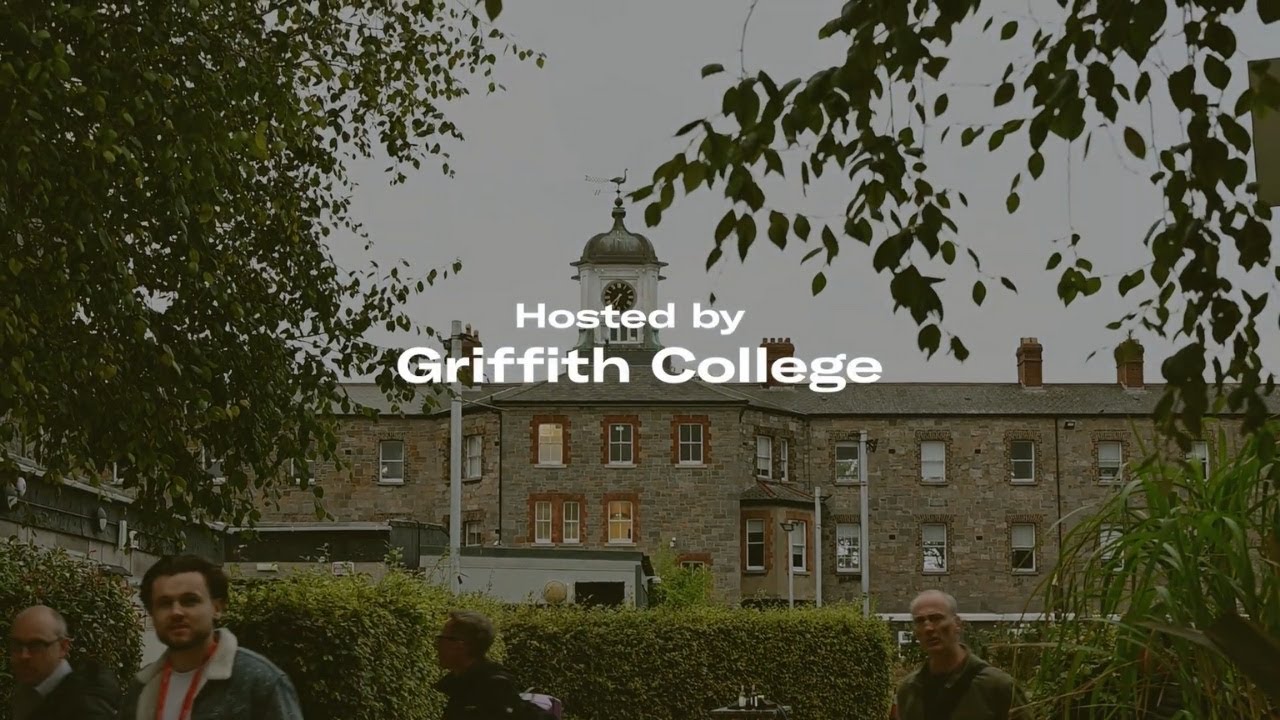
Griffith College was founded in 1974. The ground it stands on is a good deal older. The main Dublin campus buildings went up in 1813, and in the two centuries since they have been a prison, an army barracks and, since the early 1990s, a college. Few third-level institutions can say their front gate once held a nationalist leader, came under fire during the Easter Rising, and changed hands at the end of a civil war.
That gives our history two threads. One is the story of the college itself, which began in 1974 with a handful of students sitting their accountancy exams and grew into Ireland's largest independent third-level institution. The other is the story of the site on South Circular Road, which reaches back to 1813 and runs through some of the most turbulent chapters in Dublin's past.
In 2024 we marked the 50th anniversary of the college. You can look back on the year through our GC50 page.
A campus with two centuries of history
Before it was a college, the site was the Richmond Bridewell, a prison built in 1813 at a cost of around £40,000 to the city of Dublin. It held prisoners convicted of minor crimes, though conditions were hard. Its most famous inmate was Daniel O'Connell, held for three months in 1843 after his planned Repeal meeting at Clontarf was banned. Young Ireland leaders Thomas Francis Meagher and William Smith O'Brien followed in 1848, and the Fenian leader James Stephens made a headline-grabbing escape from the Bridewell in 1865.
In 1892, after extensive rebuilding, the prison reopened as Wellington Barracks and was garrisoned by British troops. It served as a recruiting and training depot through the First World War, came under sniper fire during the 1916 Easter Rising, and saw rifles smuggled out across the Grand Canal by the IRA during the War of Independence.
After the Anglo-Irish Treaty, British troops handed the barracks over to the new Irish Free State in 1922. The following year it was renamed Griffith Barracks, after Arthur Griffith, who had died in August 1922. It stayed in army use, on and off, for most of the twentieth century, until the government began closing barracks it no longer needed. Griffith Barracks closed and its units moved to Cathal Brugha Barracks in Rathmines.
Griffith College bought the site in 1991 and has been here ever since. Two of the main campus buildings carry the names of men tied to its past — the Daniel O'Connell and Arthur Griffith buildings — a nod to the prisoner and the president whose stories run through the walls.
Timeline
(Each entry is short on purpose. The deeper era pages carry the full detail and are linked at the end. If your Drupal build has a timeline or accordion component, this maps straight onto it — otherwise it reads fine as a plain list.)
1813 — The Richmond Bridewell is built on the site of the former Grimwood Nurseries, at a cost of about £40,000 to the city.
1843 — Daniel O'Connell is held for three months after his Repeal meeting at Clontarf is declared illegal.
1848 — Young Ireland leaders Thomas Francis Meagher and William Smith O'Brien are imprisoned here.
1865 — Fenian leader James Stephens escapes from the Bridewell and flees to France, then America.
1877 — The War Department buys the site for a future barracks, though troops do not move in until the 1890s.
1883 — Fenian Joseph Poole is hanged at the Bridewell in a case widely believed to have involved a packed jury.
1892 — Rebuilt and renamed Wellington Barracks, the site is garrisoned by the Royal Munster Fusiliers.
1916 — During the Easter Rising the barracks comes under sniper fire, and a patrol sent towards Wexford Street is ambushed.
1919–1921 — IRA quartermaster Kit Farrell smuggles over 100 rifles out of the barracks, swimming them across the Grand Canal by night.
1922 — Following the Anglo-Irish Treaty, British troops hand the barracks to the Irish Free State.
1923 — Renamed Griffith Barracks after Arthur Griffith. During the Civil War it houses the National Army's Intelligence Department.
1937 — Part of the parade ground is sold to the Irish Amateur Boxing Association and becomes what is now the National Stadium.
1941 — The Griffith Barracks garrison runs a search and rescue operation after a German air raid on nearby Dolphin's Barn.
1974 — Griffith College is founded, offering training for students sitting their accountancy exams.
1991 — Griffith Barracks closes and the site is bought by Griffith College. (Note: your 1991–Today sub-page currently dates this purchase to 1992 — worth reconciling.)
1992 — The Tiernan Design School moves onto campus and becomes the Griffith College Faculty of Design. Early degree courses in computing and business studies follow.
1998 — The Leinster School of Music and Drama, founded in 1904, moves on site. President Mary McAleese opens the Griffith Barracks National School in the former guardhouse.
2000 — A Link Block is built to connect the Daniel O'Connell and Arthur Griffith buildings.
2004 — The Griffith Halls of Residence open.
2006 — The conference centre, design bunker, restaurant and bar are added.
2024 — Griffith College marks its 50th anniversary.
Today — The college is home to just under 8,000 students from 77 countries, with partnerships across 140 institutions worldwide.
Explore each era in detail
- The Richmond Bridewell, 1813–1892
- Wellington Barracks, 1892–1922
- Civil War, 1922–1923
- Griffith Barracks, 1923–1991
- 1991 to today
Further reading and archive footage
Watch: the history of the site
We welcomed historian John Dorney onto campus to record five short snapshots of how the buildings were used across their history — the Richmond Bridewell (1813–1892), Wellington Barracks (1892–1922), Griffith Barracks in the Civil War (1922–1923), and Griffith Barracks (1923–1991).